Skip to content
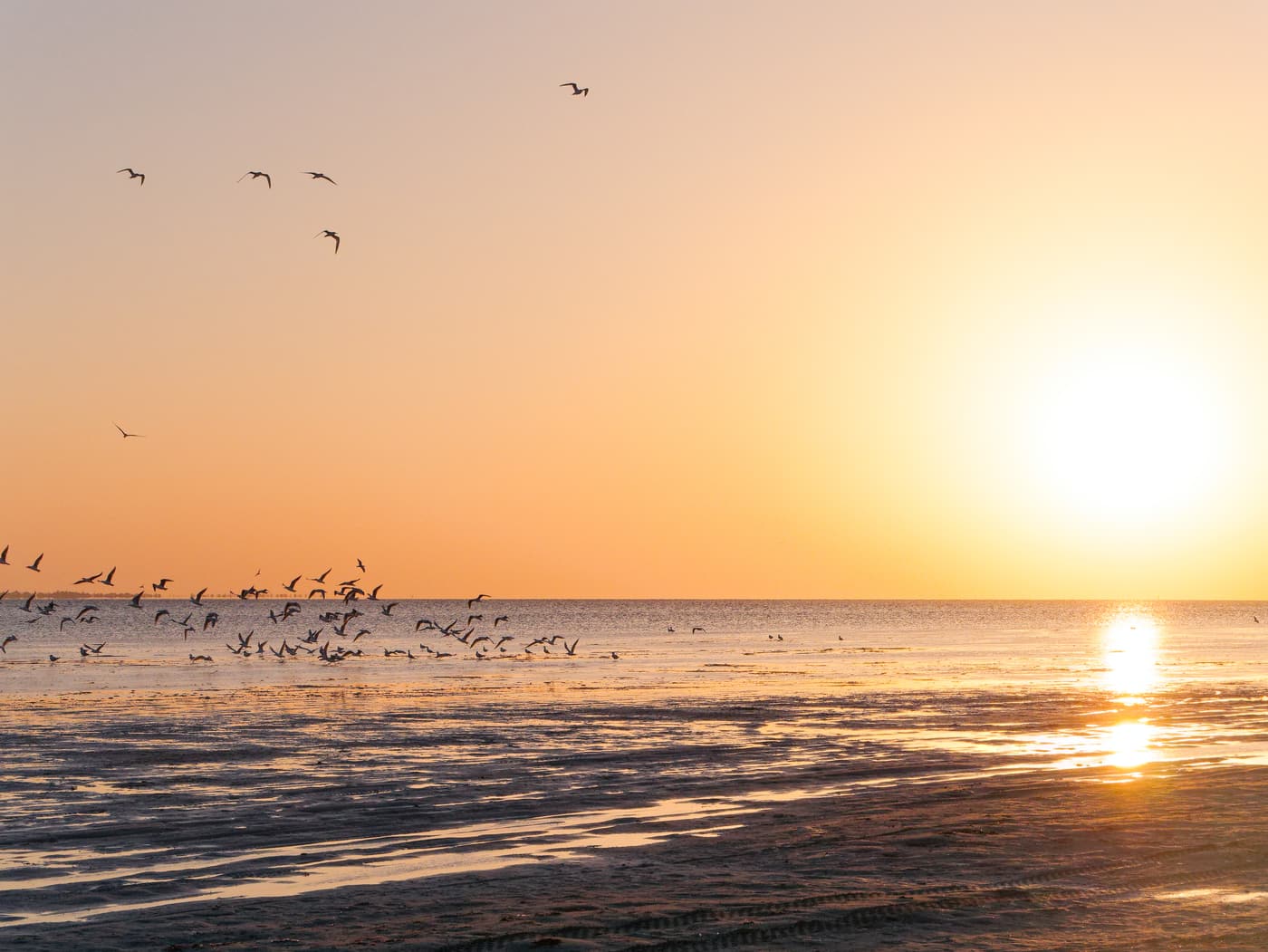
The sea at dusk off the coast of Djerba under a pink and violet sky
Independent guide — not an official tourism office

Djerba: whitewashed domes, long beaches and the Sahara next door

Tunisia’s island of souks, synagogues, potters and pirate boats — and the easiest gateway to the desert. Where to go, what to book and how to plan a few days or a fortnight.

⭐ Top-rated experiences✔ Free cancellation on most tours⚡ Instant confirmation
Why Djerba is different

An island with its own way of living — now a World Heritage Site

Djerba lies in the Gulf of Gabès off south-eastern Tunisia, joined to the mainland by an ancient causeway. It is the largest island off the coast of North Africa — flat, sunny and ringed with sandy beaches — and for centuries Muslims and Jews, Arabs and Amazigh (Berbers) have shared it.

That long history left a landscape unlike anywhere else in Tunisia: small fortress-like mosques, the ancient El Ghriba synagogue, family homesteads called menzels scattered among olive groves, and villages each known for a craft. In 2023 UNESCO inscribed it on the World Heritage List as “Djerba: testimony to a settlement pattern in an island territory”. This guide covers the island and the Sahara day trips beyond it — with honest timings and no invented prices. We are an independent site with no connection to any government or tourist office.

2023UNESCO World Heritage
~514 km²Largest island of North Africa
~7 kmCauseway to the mainland
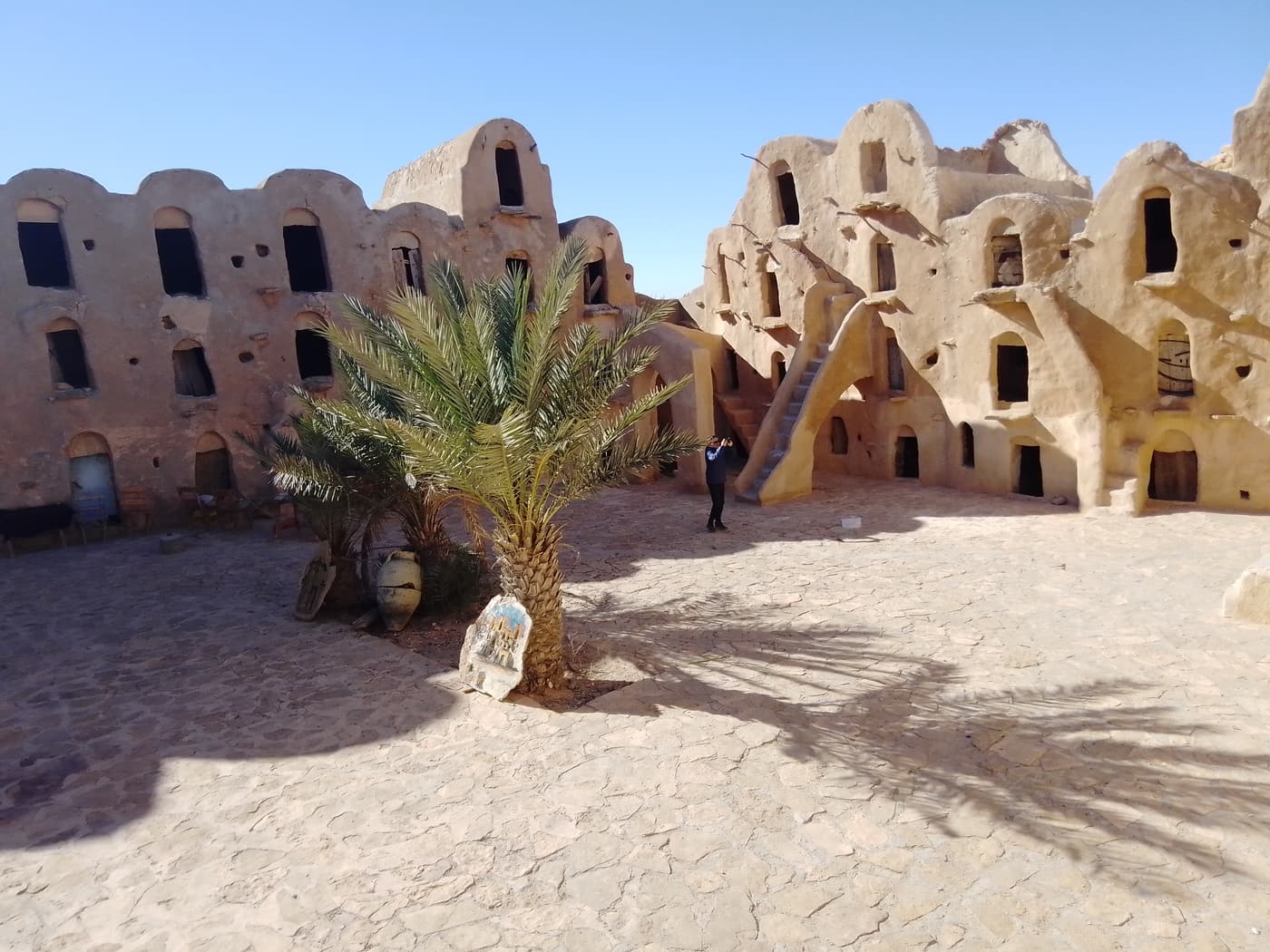
The sculpted white walls and outer staircase of the Fadhloun mosque
Visitor favourites

The best tours and trips on Djerba

Curated, well-reviewed experiences booked through GetYourGuide. Prices are indicative starting points in euros — tap any tour for live availability in your currency.

Live availability

Book Djerba tours & activities

Real-time prices and availability, straight from GetYourGuide. Free cancellation on most experiences.

Powered by GetYourGuide
Where to go

Souks, synagogue, street art and sandbars

Houmt Souk and its fort, El Ghriba and the murals of Erriadh, the potters of Guellala, the beaches of the east coast and the sand spit of Flamingo Island — then across the causeway to the Sahara.

Bags, clothes and souvenirs hanging along a vaulted market lane in Houmt Souk Towns, villages & heritage

Houmt Souk

The island capital: covered souks, old fondouks, a harbour and a seafront fort.

Djerba’s main town and market since the Middle Ages: a tangle of vaulted souks and small squares, former caravan inns (fondouks) turned into guesthouses, a fishing harbour, a heritage museum and the fort of Borj El Kebir on the sea.

The prayer hall of El Ghriba with blue arches, coloured tiles and chandeliers Towns, villages & heritage

El Ghriba Synagogue

One of the oldest Jewish places of worship in Africa, in the village of Erriadh.

A synagogue revered for centuries by the Jews of Djerba — one of North Africa’s oldest surviving Jewish communities — with a richly tiled blue-and-white prayer hall and an annual spring pilgrimage. Visitors are welcome outside services, under tight security.

A large black chameleon painted inside an old stone archway in Djerbahood Towns, villages & heritage

Djerbahood (Erriadh)

A traditional village turned open-air street-art gallery.

In 2014 artists from around the world were invited to paint the whitewashed walls of Erriadh. Hundreds of murals later, the village’s lanes, domes and doorways form one of the most unusual art walks in the Mediterranean.

A great heap of terracotta jars and pots outside a workshop in Guellala Towns, villages & heritage

Guellala

The pottery village of the south coast, with a hilltop heritage museum.

For centuries Guellala has made the jars, pots and amphorae of Djerba from the clay of its low hills. Workshops line the main street, some partly underground, and a museum on the ridge above the village tells the story of island life.

The shallow lagoon and curving sand spit of Ras Rmel Beaches, lagoon & island fun

Flamingo Island (Ras Rmel)

A long sand spit in the shallows north-east of Houmt Souk.

Ras Rmel is a hooked peninsula of sand and low dunes enclosing a shallow lagoon. Pirate-style boats from Houmt Souk bring visitors for swimming and lunch, and in the cooler months greater flamingos feed in the surrounding shallows.

A thatched parasol, kayaks and pedalos on a sandy hotel beach in Djerba Beaches, lagoon & island fun

Sidi Mahrez & the Zone Touristique

The island’s hotel coast: long sandy beaches between Houmt Souk and Midoun.

The north-east shore of Djerba is lined with resort hotels behind wide sandy beaches — Sidi Mahrez, Seguia and Sidi Yati among them. This is where most visitors stay, where water sports operate and where most tours pick up.

Where to stay

Beach resort, fondouk or village guesthouse?

Big resorts on the sands of the Zone Touristique, simple courtyard hotels in Houmt Souk and boutique guesthouses in Erriadh — compared, with live rates on Booking.com.

Hotel Dar Dhiafa

📍 Erriadh

A boutique hotel made from traditional Djerbian houses in Erriadh, about ten minutes’ drive from Houmt Souk. One of the island’s best-rated places to stay for architecture and atmosphere.

  • Traditional houses, boutique style
  • Quiet village setting
  • Close to Djerbahood and El Ghriba

Hôtel Djerba Erriadh

📍 Old town, Houmt Souk

A simple hotel set around a traditional courtyard in the heart of Houmt Souk, steps from the souks. Guests praise the location; note that cars cannot reach the lanes in front, so expect a short walk with luggage.

  • In the old town
  • Traditional courtyard building
  • Walk to souks, fort and restaurants

Radisson Blu Palace Resort & Thalasso, Djerba

📍 Zone Touristique, Sidi Mahrez area

A large beachfront resort with a thalasso spa and several restaurants, consistently well reviewed by thousands of guests — a reliable upscale choice.

  • Beachfront
  • Thalasso spa
  • Several restaurants

Iberostar Waves Mehari Djerba

📍 Sidi Akkour beach, Zone Touristique

An all-inclusive resort beside Sidi Akkour beach with two pools, a spa and tennis courts. Among the highest-rated big resorts on the island.

  • All-inclusive
  • Two pools and spa
  • Very well reviewed

Dar Ennour Djerbahood Erriadh

📍 Erriadh (Djerbahood)

A recently renovated guesthouse in the street-art village of Erriadh, with a sun terrace and parking. Very highly rated by guests for its welcome and calm — and El Ghriba is a short walk away.

  • In the Djerbahood village
  • Sun terrace
  • Walk to El Ghriba

Djerba Plaza Thalasso & Spa

📍 Zone Touristique, Midoun

A beachfront resort renovated in 2014, with direct beach access, two pools, tennis and squash courts and a spa with sauna and hammam.

  • Direct beach access
  • Two pools
  • Spa with hammam
Plan your island days

Souks, sandbars and the Sahara — all from one island

A half-day loop of Houmt Souk, El Ghriba and Djerbahood, a pirate boat to Flamingo Island or a 4x4 to the dunes — compare tours with hotel pickup and book in a couple of taps.

Good to know

Djerba: your questions answered

Frequently asked questions

Is this the official Djerba tourism website?

No. VisitDjerba.com is an independent travel guide. We are not connected with the Tunisian National Tourism Office or any government body. For official notices and entry rules, consult the authorities directly.

How do I get to Djerba?

Most visitors fly into Djerba–Zarzis airport (DJE), either directly from Europe (many routes are seasonal) or via Tunis. Overland, buses and louages (shared minibuses) run from Tunis and other cities. See getting to Djerba.

What currency is used in Djerba?

The Tunisian dinar (TND). It is a closed currency: you exchange money on arrival, and you should not take dinars out of the country. Euros are widely understood in tourist areas, but prices are in dinars. More in the travel guide.

Can I visit the Sahara from Djerba?

Yes. Day trips reach Matmata, Tataouine, Chenini and the dunes of Ksar Ghilane, and two-day tours include a night in a desert camp. Our Sahara day-trips guide compares the options.

Where is the best place to stay on Djerba?

For beaches and resort facilities, the Zone Touristique between Sidi Mahrez and Aghir. For atmosphere and restaurants, Houmt Souk. For quiet and character, a guesthouse in Erriadh. See where to stay.

When is the best time to visit Djerba?

April to June and September to October give warm weather without the peak heat and crowds of July and August. Winters are mild and sunny but too cool for most swimmers. Details in when to visit.